


Why Airports Are the Ultimate Test of Product Design
Airports are chaos disguised as architecture. They’re where good design survives, and bad design gets exposed in public.
If you want to know whether a product is actually well-designed, don’t test it in a showroom. Test it in a security line at 6 AM. Test it while juggling coffee, a passport, and a boarding pass. Test it when a TSA agent asks you to unpack your bag and there’s a line of 40 mildly irritated people behind you.
That’s where design becomes real.
 At Ekster, we’ve spent a lot of time studying exactly that: how people move through airports, where they get stuck, what slows them down, and what makes them visibly stressed.
Airports are like a live-action research lab for product design. Here’s what they taught us.
Airports reveal the truth about design
Research in human factors and environmental psychology shows that high-stress, time-sensitive environments expose friction in tools and systems fast. Airports are exactly that:
-
High cognitive load (gate numbers, boarding times, ID checks)
-
Physical constraints (crowds, security trays, overhead bins)
-
Time pressure (boarding deadlines)
-
Security procedures that interrupt flow
Under stress, people rely on muscle memory and simplicity. The fewer steps required to complete a task, the better the experience. That’s not marketing fluff; it’s basic usability science. And airports amplify everything.
Test #1: Can you use it with one hand?
You are holding:
-
Your phone
-
Your coffee
-
Your passport
-
Your boarding pass
-
Your dignity (barely)
If a product requires two hands and a flat surface to operate, it fails the airport test.
Ekster Smart Wallets: Speed without the fumble
Traditional wallets force you to:
-
Open flap
-
Dig through cards
-
Drop something
-
Apologize

Our smart wallets were designed for one-handed card access. One click. Cards fan out. Done. You tap, pay, move on.
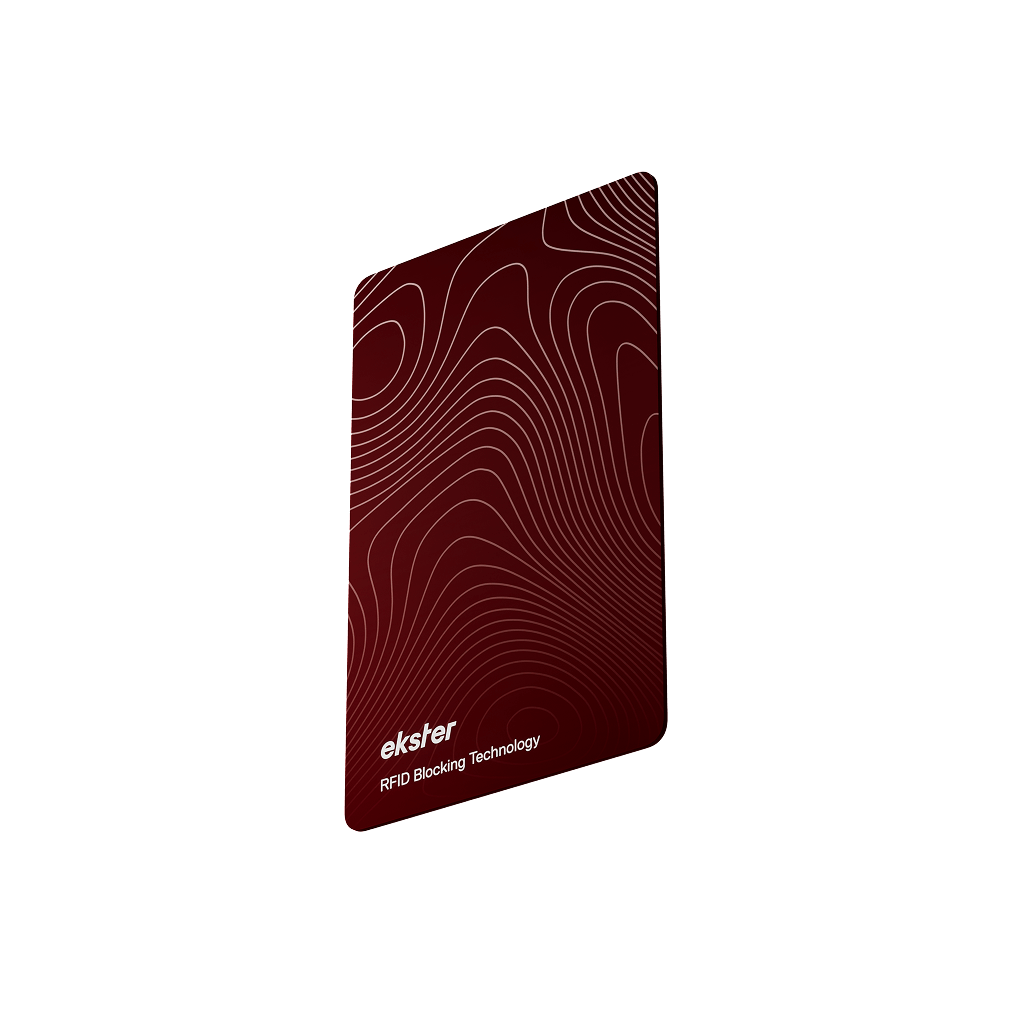
Add RFID protection, and you’re not worrying about digital pickpocketing in crowded terminals. Add trackability, and if your wallet slips between airport lounge cushions, you don’t spiral; you track it.
Minimal steps. Minimal stress. That’s intentional smart wallet design.
Test #2: Speed under pressure
Airports punish hesitation. The faster you can:
-
Access your passport
-
Remove your laptop
-
Stow your charger
-
Repack your bag
… the smoother your experience.
The GRID Backpack: Built for security check reality
We observed one recurring airport moment: TSA asks someone to unpack their bag. Suddenly:
-
Cables are tangled
-
Toiletries are loose
-
Your laptop is buried
-
Everything ends up in a chaotic tray pile

The GRID Backpack is designed around compartment logic. Quick laptop access. Defined zones for tech. Structured storage so items don’t collapse into each other.
That means:
-
Faster tray loading
-
Faster tray clearing
-
Less repacking chaos
It’s not about adding pockets. It’s about reducing friction.
Test #3: The repacking nightmare
Here’s the universal airport truth: Packing at home? Easy. Repacking at security? Somehow impossible.
Clothes don’t fit the same way. Zippers resist. You sweat profusely. We saw this over and over.
TravelPack™ Vacuum Kit: Repacking without the panic
The TravelPack™ Vacuum Kit solves the post-security meltdown.
Because the mini portable pump means compression isn’t a one-time home ritual. You can:
-
Reopen the bag
-
Add or remove items
-
Recompress on the spot
No awkward kneeling on your suitcase. No wrestling with zippers.

And here’s the bigger shift: When vacuum compression lets you pack more into a carry-on, you:
-
Skip checked baggage fees
-
Avoid baggage claim lines
-
Eliminate the risk of lost luggage
-
Prevent airline damage
That’s not just convenience. That’s time saved, money saved, and stress eliminated. Design should reduce risk, not create it.
Test #4: Security & theft in crowded spaces
Airports are prime environments for:
-
Digital skimming
-
Pickpocketing
-
Accidental loss
We design for that reality.
-
RFID-blocking wallets protect your card data.
-
Trackable wallets and trackers give you a recovery plan.
-
Structured backpack compartments reduce “where did I put that?” panic.
When your gate changes and you’re power-walking across Terminal B, the last thing you need is doubt about where your essentials are.
Test #5: Emotional stress
Airports trigger low-level anxiety in most people. Studies show travel environments increase cortisol due to unpredictability and time pressure.
Design that works under calm conditions but fails under stress isn’t good design. What we learned from observing airport behavior:
-
People want fewer decisions.
-
They want predictable organization.
-
They want speed.
-
They want backup systems (like tracking).
That’s why minimalism matters. Fewer moving parts = fewer failure points.
Test #6: Overhead bin tetris
Another overlooked pain point? Trying to jam an overstuffed carry-on into a full overhead bin while everyone watches.
Compression travel bags change the equation. A tighter, flatter pack profile fits easier. The GRID Backpack’s structure prevents bulging and uneven weight distribution. That’s ergonomics meeting real-world constraints.
Test #7: The “gate change sprint”
You’ve got 12 minutes. Different terminal. Fast walk turning into jog.
What fails here?
-
Loose straps
-
Poor weight distribution
-
Overpacked bags that strain shoulders
The GRID Backpack’s load balance and structured form reduce shifting weight mid-stride. You’re not readjusting every 20 seconds.
That’s invisible design doing its job.

Why airports matter in product design
Airports compress time, stress, movement, and security into one concentrated experience. If a product performs well there, it performs anywhere.
That’s why we study airports:
-
Where people hesitate
-
Where they drop things
-
Where they repack
-
Where they panic
And we design around those moments. Not hypotheticals. Real-world friction.
The Carry-on advantage: Freedom over friction
Let’s talk about checked baggage for a second.
-
Lost luggage rates are still a reality.
-
Baggage fees keep rising.
-
Waiting at baggage claim adds 20–40 extra minutes to your trip.
Compression travel systems let you travel carry-on only; even for longer trips. That changes your entire airport experience.
You walk off the plane and leave. No waiting. No fees. No “your bag didn’t make it.”
That’s product design influencing lifestyle.
Good design is invisible under pressure
Airports don’t lie. If your gear works there, it works anywhere.
The best compliment a product can get in an airport is that you never even think about it; nevermind not being frustrated by it.
Ideally: You move. You clear security. You board. You land. You leave.
No friction. No chaos. That’s the ultimate test. And at Ekster, we’ve made sure our travel gear and everyday carry items pass the airport test.
Embark on smoother journeys with Ekster.

FAQs
Why are airports a good test of product design?
Airports combine stress, time pressure, security checks, and physical constraints. Products that perform well in this environment prove they are intuitive, efficient, and resilient under pressure.
How do vacuum travel bags help at airport security?
Vacuum travel bags allow you to easily reopen, adjust, and recompress your clothing using a portable pump. This makes repacking after TSA inspections fast and simple, even in busy terminals.
Can vacuum compression bags help avoid checked luggage?
Yes. Compression systems allow you to fit significantly more into a carry-on, helping you avoid baggage fees, lost luggage risks, and long waits at baggage claim.
Why is one-handed wallet access important for travel?
In airports, travelers often carry multiple items at once. One-handed wallet access improves speed and reduces fumbling, especially at security checkpoints and boarding gates.
Are RFID wallets necessary in airports?
Crowded spaces like airports increase the risk of digital pickpocketing. RFID-blocking wallets add an extra layer of protection for credit cards and passports.
What features should a backpack have for frequent flyers?
A good travel backpack should offer quick laptop access, structured compartments, balanced weight distribution, and durable materials to handle repeated security checks and overhead bin storage.


