


Best Luggage Trackers for 2026: What Works with Android and iPhone
Nobody buys a luggage tracker for fun. You buy one because your bag got lost once, or because you watched someone else's disappear on the carousel and thought, "not me, not this time." Fair enough. Airlines mishandle tens of millions of bags a year, and a tracker is the cheapest insurance you can pack.
The problem is that most "best luggage tracker" lists just repeat the same five names without asking what actually matters for a suitcase.
A key tracker and a luggage tracker aren't solving the same problem. Your keys live in your pocket. Your suitcase gets thrown into a cargo hold, shipped across a continent, and handed to strangers. It needs a tracker built for that.
Ours are. The Tracker Card and Tracker Tag both run on Apple Find My® and Google Find Hub®, so it doesn't matter what phone you're carrying when you land at the wrong airport.
No subscription, no separate app to download, no guessing which network actually covers where you're going.

How to choose a luggage tracker
Before you buy anything, run it through four questions.
Does it work with your phone?
This is where most people get burned. Apple's AirTag only talks to iPhones. If you're on Android, or if your travel partner is on a different phone than you, an AirTag is dead weight in a checked bag.
Look for a tracker built on Google's Find Hub network, or better, one that runs on both networks so it doesn't matter whose phone finds it. Ekster’s trackers check this box.
How far does it reach once you're off the plane?
Bluetooth trackers like Ekster’s Tracker Card and Tag don't broadcast to space. They rely on other people's phones passing nearby and relaying the location back to you.
That sounds limiting until you realize an airport or train station is basically a stadium of phones. The moment your bag rolls onto a carousel, or sits in a cart near a gate, someone's phone picks it up.
GPS trackers with a SIM card promise real-time tracking through the cargo hold itself, but they cost more, need a data plan, and most airlines don't love passengers packing an active cellular device into checked luggage.

Is there a subscription hiding in the fine print?
Some trackers look cheap until you hit the paywall for live tracking or global coverage. Our tracking devices skip that entirely. Apple Find My and Google Find Hub are free, and so is everything we build on top of them.
Will it survive the trip?
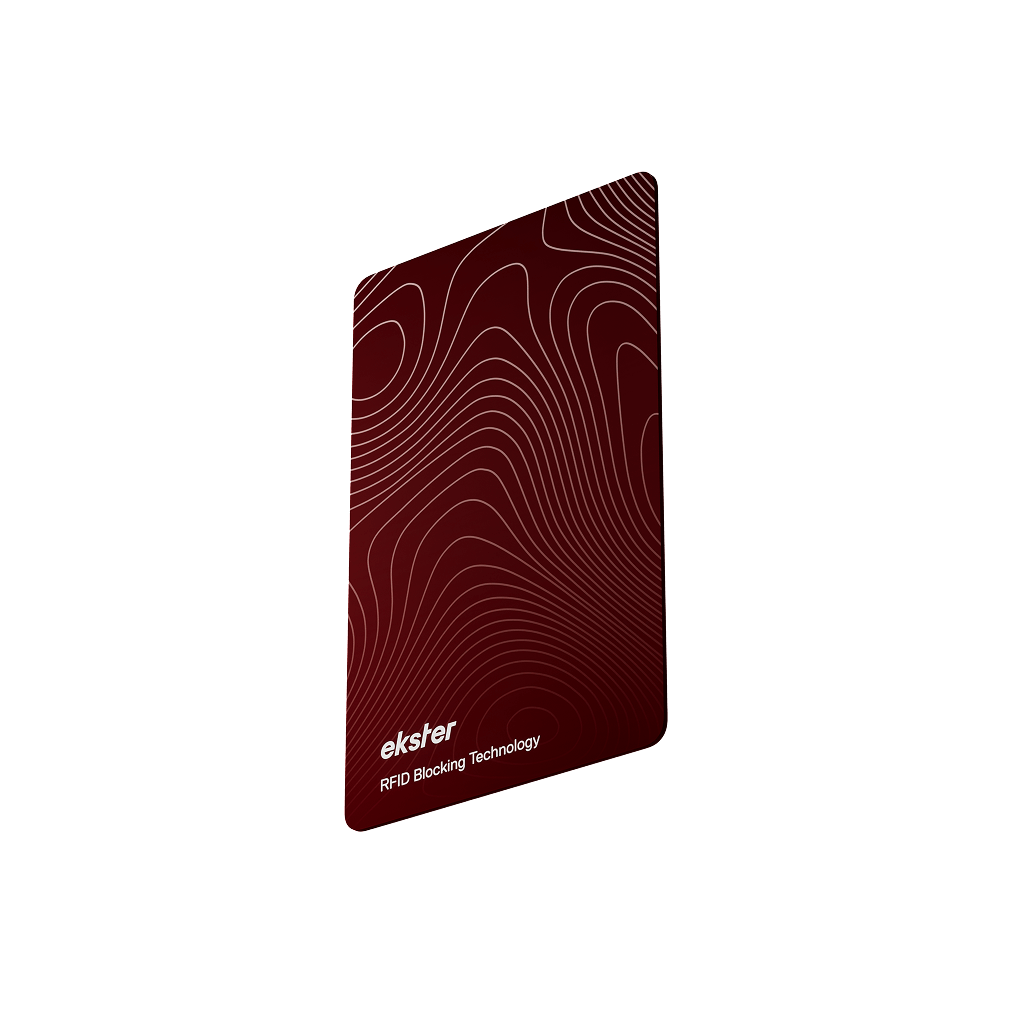
A suitcase gets tossed, dropped, and occasionally rained on during the walk to the gate. The Tracker Card is rated IP68, so it can sit through a splash, a spill, or a rogue puddle without blinking.
If you want something with a bit more heft for a duffel or a backpack side pocket, the Tracker Tag clips on and takes the abuse a slim card can't.
If you want to go deeper on how the tech itself works, we've got a full breakdown in how luggage trackers are changing the way people travel. This guide is about picking the right one. That one's about the bigger picture.
Best luggage trackers for Android
Here's something most buying guides skip past: the majority of luggage trackers on the market, including the AirTag, only work with an iPhone.
If you're on Android, that rules out a huge chunk of what shows up in a "best luggage tracker" search.
Google's own answer is Find Hub (the network formerly known as Find My Device), and a small number of trackers are actually built to run on it. Ekster’s dual-network trackers do, alongside Apple Find My, so you're not locked into one ecosystem.
That matters more than it sounds like it should. Couples and families often travel with a mix of iPhones and Android phones, and a tracker that only reports to one of them means half the group is flying blind if a bag goes missing.
The Tracker Tag is the pick if you want something rugged enough to clip straight onto a duffel handle or backpack zipper. Press the button, add it in Find Hub, and it works exactly the same as it would in Apple Find My. No new app, no separate login.
If your bag has a pocket that fits a card, the Tracker Card does the same job at a fraction of the size, and it's the one we'd throw into a passport holder or a laptop sleeve you're not ready to hand over to strangers at check-in.

Can you fly with a luggage tracker?
Yes. Both the TSA and FAA allow Bluetooth trackers like the Tracker Card and Tracker Tag in carry-on and checked luggage.
The rule that trips people up is about lithium batteries generally, not trackers specifically: loose batteries can't go in checked bags, but a battery installed inside a device (which is exactly how these trackers work) is fine.
The Tracker Card charges wirelessly and has no batteries to remove in the first place, so there's nothing to worry about there.
Where to get the best luggage trackers
You can find both the Tracker Card and the Tracker Tag on ekster.com, along with the rest of our wallets and travel gear built to work with them.
Every order ships free within 1 to 5 days, and comes with a 100-day try-out guarantee, so if the Tracker Card or Tracker Tag doesn't earn its spot in your bag, you can send it back with no hassle.
FAQ
Can I track my luggage with an Android phone?
Yes. The Ekster Tracker Card and Tracker Tag both run on Google Find Hub, so Android users get the same tracking experience iPhone users do through Apple Find My. No workaround needed, no app to buy.
Can I put a tracker in checked luggage?
Yes. The TSA and FAA both allow Bluetooth trackers in checked bags. The battery restrictions people worry about apply to loose spare batteries, not to a battery that's already installed inside a device like the Tracker Card or Tracker Tag.
Do luggage trackers need a subscription?
No, not the ones built on Apple Find My or Google Find Hub. The Ekster Tracker Card and Tracker Tag use those free networks, so there's no monthly fee for basic location tracking.
What's the difference between the Ekster Tracker Card and the Tracker Tag?
The Ekster Tracker Card is the slim, credit-card-sized option that fits inside a wallet, passport holder, or card slot in your luggage. It's IP68 water-resistant. The Tracker Tag is bulkier and clips onto keys, bag zippers, or backpack straps, better suited to gear that doesn't have a card slot to hide a tracker in.
Do luggage trackers work if my bag is in the cargo hold?
Bluetooth trackers go quiet while your bag is isolated in the hold, since there's no nearby phone to relay the signal. The moment it's near people again, on a cart, at a transfer point, or on the carousel, the location updates. It's not real-time GPS, but it covers the moments that actually matter: knowing where your bag ended up.


